The Canada-USA border facilitates over $700 billion in trade annually, making it the busiest bilateral trade relationship in the world. In 2026, navigating that border as a freight shipper has become more operationally complex than at any point in recent memory. New tariff structures, heightened customs scrutiny, and evolving documentation requirements have added layers of planning that shippers on both sides of the border can no longer afford to ignore.
This guide breaks down the key changes reshaping cross-border FTL freight and gives you a practical framework for protecting your shipments, your relationships, and your timelines.
How Trade Policy Is Reshaping Cross-Border Freight
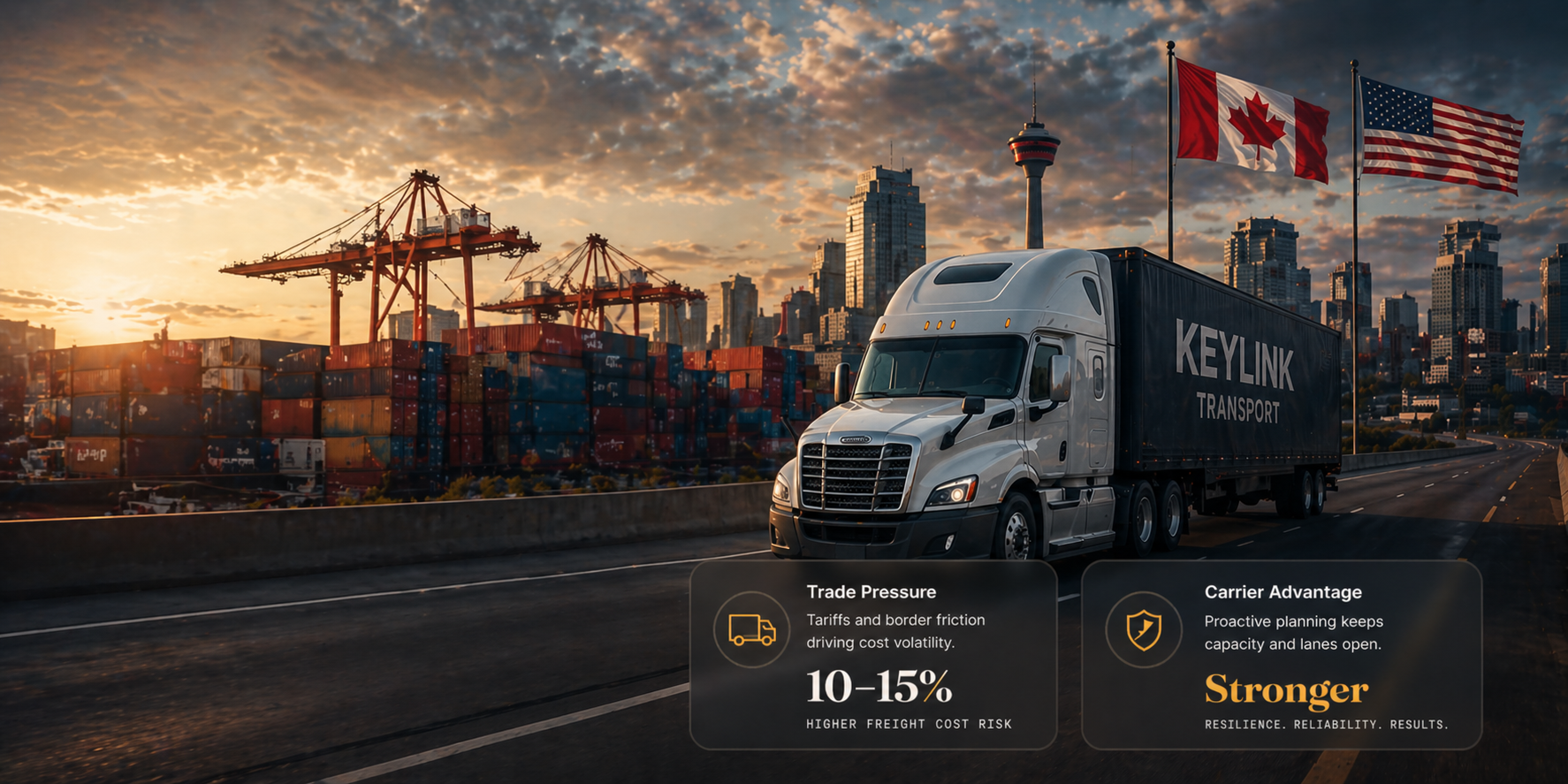
The most significant shift in Canada-USA freight in 2026 is the ongoing evolution of tariff policy. Duties affecting Canadian exports in sectors including softwood lumber, aluminum, and certain manufactured goods have forced shippers to recalculate landed costs on lanes that had been stable for years. For importers bringing US goods into Canada, retaliatory measures have created their own planning challenges.
Beyond cost, tariff-affected commodity classes have triggered additional scrutiny at ports of entry. CBP and CBSA officers are applying more rigorous inspection protocols to goods in affected categories, extending dwell times and creating unpredictability in transit schedules. Shippers who have not updated their documentation processes to reflect these changes are experiencing avoidable delays.
The Canadian Trucking Alliance has flagged the compounding effect of these inspection increases on carrier capacity: when drivers spend additional hours at the border, fewer loads move per week across the entire corridor.
Understanding the CBSA and CBP Process
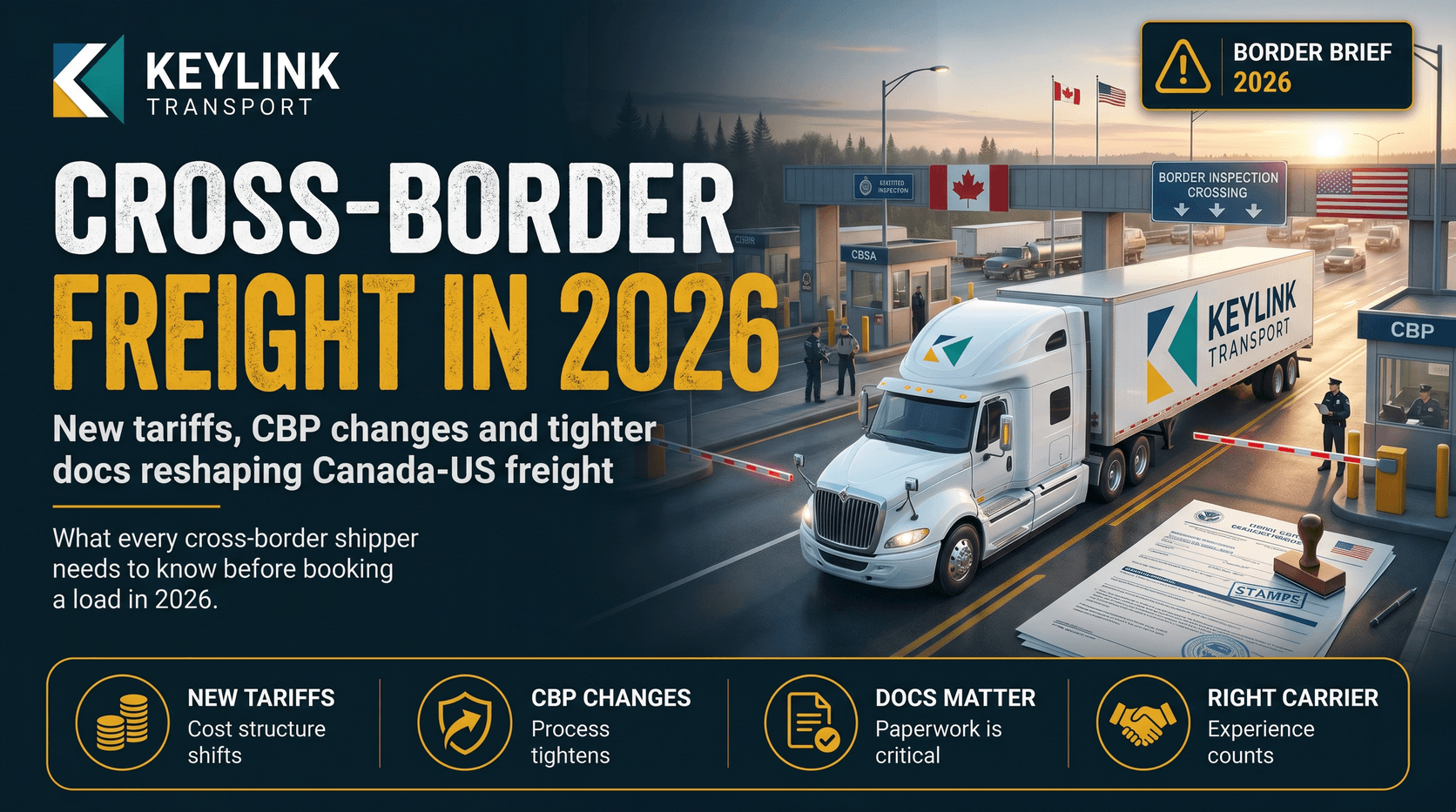
Every commercial FTL shipment crossing from Canada into the US passes through two regulatory bodies: CBSA on the Canadian side (export reporting) and US Customs and Border Protection on the American side (import clearance). The two agencies operate independently, which means your shipment must satisfy both sets of requirements before it moves.
On the Canadian side, commercial exporters must file export declarations through the Canadian Export Reporting System (CERS). On the US side, your customs broker files an entry with CBP. For time-sensitive FTL freight, using a customs broker with established relationships at your primary crossing points can reduce clearance time significantly. Carriers enrolled in the FAST (Free and Secure Trade) program receive priority processing lanes, which on busy days can mean the difference between a two-hour wait and a 20-minute crossing.
Essential Documentation for Cross-Border FTL
Documentation errors are the leading cause of preventable border delays. For a standard commercial FTL shipment crossing from Canada to the US, your carrier and customs broker will need:
Choosing the Right Cross-Border Carrier
Not all carriers are equipped to handle cross-border freight effectively. The difference between a smooth crossing and a multi-day border hold often comes down to the carrier you choose. When evaluating cross-border FTL carriers, look for:
- Active FMCSA operating authority: Verify the carrier's MC number and safety rating on SAFER Web before tendering a cross-border load.
- FAST program participation: FAST-enrolled carriers and drivers receive expedited processing at Canada-USA crossings.
- Experienced cross-border dispatch: Dispatch teams that understand CBSA export reporting, CBP entry filing timelines, and how to handle border exceptions in real time.
- ELD compliance: Required for drivers operating under FMCSA authority. Non-compliant drivers can be placed out of service at the border.
- Clean safety record: Check CSA scores. A carrier with violations is a liability risk on cross-border lanes.
"A carrier with established cross-border procedures will move your freight through the border in hours. The wrong carrier can turn a two-day lane into a five-day ordeal."
Keylink's Cross-Border Operations
Keylink Transport holds active FMCSA operating authority (USDOT 2832041, MC# 946449) and operates dedicated FTL lanes between BC-Alberta and the US Pacific Northwest. Our cross-border procedures are built around minimizing dwell time and eliminating documentation surprises. Our dispatch team handles CBSA export reporting coordination and works directly with customs brokers on your behalf to keep loads moving.
If cross-border freight is part of your supply chain, we'd welcome the opportunity to discuss your lanes. View our cross-border service offering or contact our team to start the conversation.
Keylink operates dedicated FTL lanes between western Canada and the US Pacific Northwest. No brokered loads, no surprises.
Get a Cross-Border Quote →